Apollo Neuro
$368
The Apollo Neuro is a wearable device designed to act as a “remote control” for your nervous system. Unlike traditional fitness trackers (like Apple Watch or Fitbit) that monitor your health, the Apollo actively improves it using touch therapy.
It uses scientifically developed vibration patterns (haptics) to communicate with your brain. These vibrations signal safety to the body, helping to balance the autonomic nervous system. The goal is to improve Heart Rate Variability (HRV), helping you transition more easily between states of focus, relaxation, and sleep without the use of drugs or supplements.
Point on Price, Easy to Use, Support
Price: It is a premium wellness device with a high upfront cost (approx. $350) and an optional subscription for advanced AI features.
Easy to Use: The device is screenless and simple. It is controlled entirely via a smartphone app which is intuitive and easy to navigate.
Support: The company stands behind the science with a 30-day money-back guarantee, allowing users to test if the therapy works for their specific biology.
Pros & Cons
Pros
- Scientifically Validated: Backed by clinical trials showing improvements in HRV, sleep, and focus.
- Non-Invasive: A drug-free alternative for managing anxiety and insomnia.
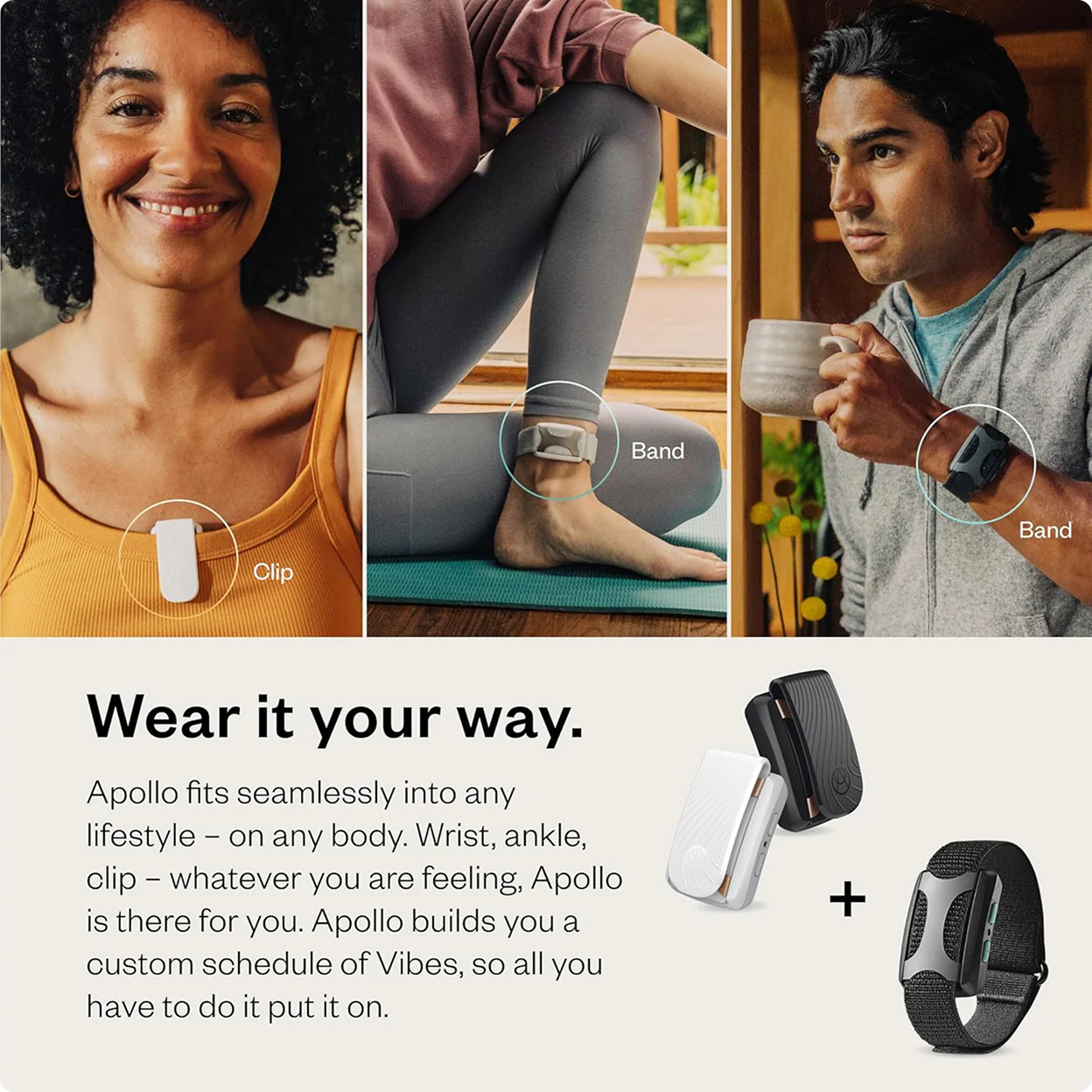
- Versatile: Can be worn on the wrist, ankle, or clipped to clothing.
- Passive Mode: Once a schedule is set, you don't need to look at your phone.
- Great for Sleep: The ankle strap makes it very comfortable to wear to bed.
Cons
- High Price: Expensive for a device that doesn't tell time or track fitness metrics (steps/calories).
- Battery Life: Requires charging every 2–3 days, which is frequent for a screenless wearable.
- Bulky Design: It looks like a simplified tracker from 2015; it is not very stylish.
- Subscription Model: Some advanced features (SmartVibes) are locked behind a paywall.
Detail Review
1. Ease Of Use
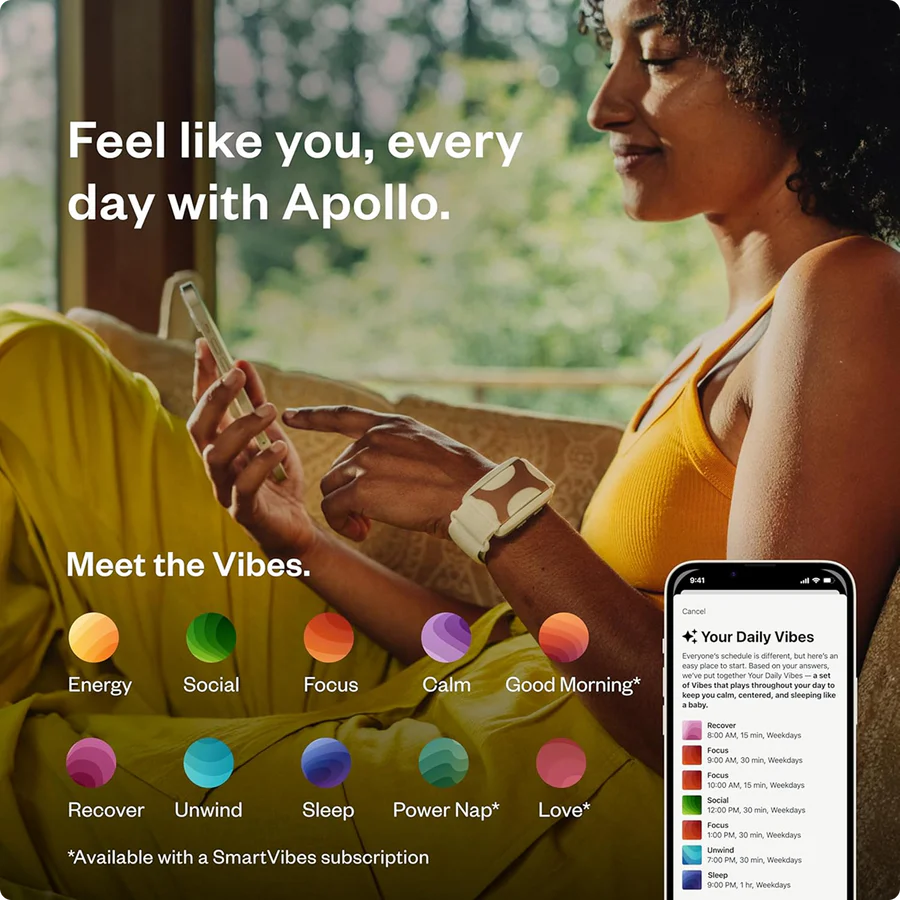
The Apollo Neuro is designed to be “set and forget.” Pairing via Bluetooth is generally fast. The physical device has two buttons: one to increase intensity and one to decrease it (or pause). The best feature regarding usability is the Scheduling function in the app. You can program your entire day (e.g., “Energy” at 7:00 AM, “Focus” at 9:00 AM, “Sleep” at 10:30 PM). Once scheduled, the device works automatically without you needing to open the app.
2. Features
The core features are the 7 distinct Vibes:
Energy and Wake Up
Social and Open
Clear and Focused
Rebuild and Recover
Meditation and Mindfulness
Relax and Unwind
Sleep and Renew
SmartVibes (AI): This is a newer feature (requires subscription) where the device learns your sleep patterns. If it detects you waking up in the middle of the night, it automatically plays soothing vibrations to lull you back to sleep.
3. Reliability
Build: The device is plastic but feels durable. The straps are made of neoprene and are comfortable, though they can absorb sweat.
Connectivity: Bluetooth reliability is generally good, though occasionally the app may take a moment to sync with the device.
Battery: This is the weak point. You will get about 6–8 hours of continuous playback. Since you don’t run it 24/7, this translates to about 2 to 3 days of real-world use.
4. Support
Apollo’s customer support is well-regarded. Their website is packed with educational resources, webinars, and scientific papers.
Warranty: 1-year limited warranty.
Return Policy: The 30-day risk-free trial is excellent. Because haptic therapy is subjective (some people feel it immediately, others take weeks), this trial period is essential for justifying the purchase.
5. Price
Device: ~$349.99 USD.
Subscription: ~$99/year (Optional).
Verdict: It is pricey. If you just want a cool gadget, it’s too expensive. However, if you spend hundreds of dollars on therapy, sleep medication, or coffee, the Apollo Neuro may actually save you money in the long run by replacing those needs naturally.
6. Responsive
The device is highly responsive. When you change a mode or intensity on the app, the vibration on your wrist changes almost instantly. The haptics are not “buzzing” like a phone notification; they are subtle, wave-like, and refined.
Final Thoughts
The Apollo Neuro is not a toy; it is a tool. It is best suited for “bio-hackers,” people with high-stress jobs, or those suffering from insomnia and anxiety. It requires consistency—you must wear it and use it daily to retrain your nervous system.
It acts like a “hug” for your nervous system. If you can overlook the bulky design and the high price tag, it is one of the most effective non-pharmaceutical tools for mental wellness currently on the market.

(Points deducted largely due to the high price point and average battery life).